A Research Repository for Cyanobacterial Isolates
CyanoVault is a curated collection of cyanobacterial strains, with a specialized focus on thermophilic isolates from Yellowstone National Park geothermal environments.
The repository provides documented strain records, genomic information, cultivation conditions, and laboratory growth data to support research and teaching.
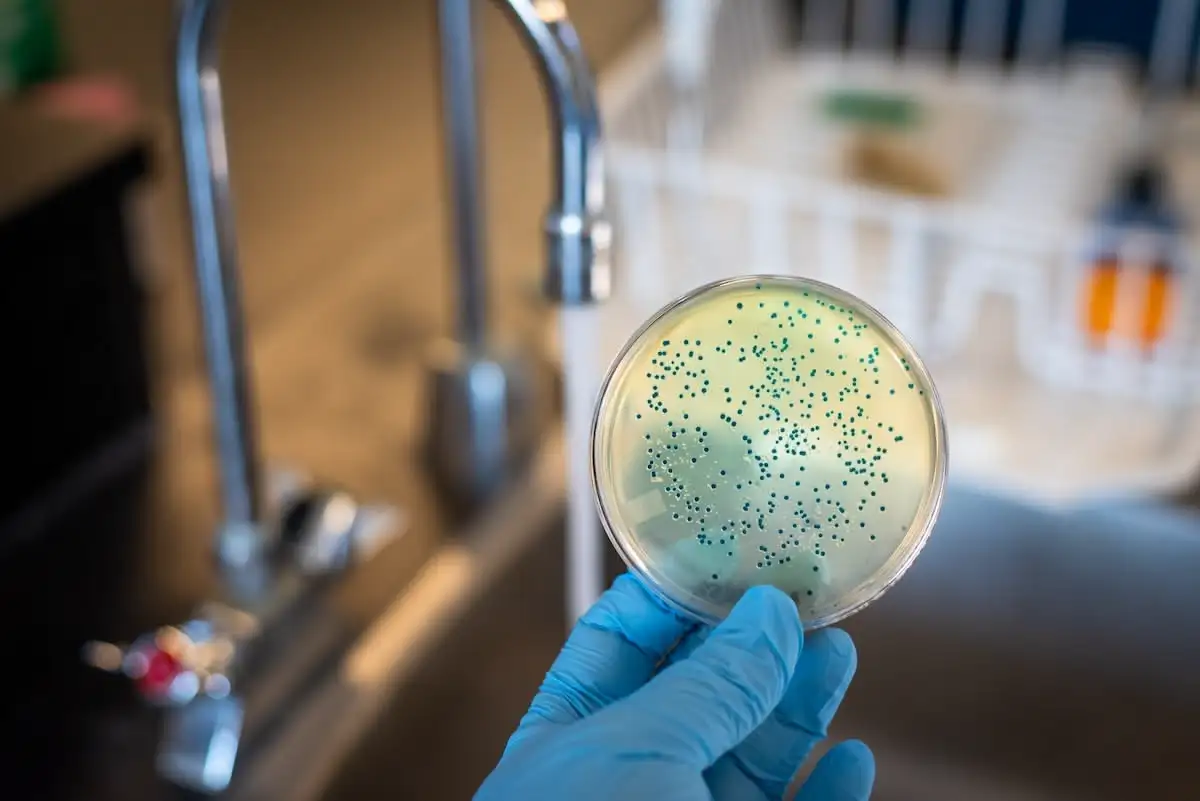
Advancing Cyanobacteria Research Through Open Science
Thermophilic cyanobacteria from geothermal environments are inherently challenging to isolate, cultivate, and maintain under laboratory conditions. Sustained high temperatures impose physiological constraints that affect growth stability and long-term preservation. Consequently, well-documented thermophilic cyanobacterial collections remain limited worldwide.
Created & Maintained By
Dr. Rajesh Sani and Dr. Tanvi Govil in the Department of Chemical and Biological Engineering at South Dakota Mines.
The platform is supported through the BioNitrogen Economy Research Center (BNERC), funded by the U.S. National Science Foundation EPSCoR E-RISE program.
Thermophilic Adaptation & Value
These organisms harbor heat-stable enzymes, photosynthetic machinery, and regulatory networks that sustain oxygenic photosynthesis under thermal stress, valuable models for high-temperature adaptation and thermotolerant bioprocess design.
Systematic Curation
CynoVault documents and curates thermophilic isolates from Yellowstone geothermal systems, integrating genomic records, cultivation parameters, and growth performance data for direct comparison across isolates.
Expanding Collection
The collection grows through active isolation efforts by the CynoVault team, serving as a research platform within BNERC to advance thermophilic nitrogen utilization and high-temperature bioprocess design.
Comprehensive Research Repository
Access curated strains, protocols, and research insights from the thermophilic cyanobacteria community
- Cyanobacteria Strains
- Research Protocols
- Research Insights
- Events Hosted
Featured Strains
Discover extremophiles from diverse thermal environments

Thermosynechococcus elongatus
Thermosynechococcus elongatus BP-1 is a thermophilic, unicellular cyanobacterium commonly used as a model organism for oxygenic photosynthesis. It grows optimally at high temperatures (approximately 50-55 °C) and performs efficient light-driven carbon fixation using well-organized photosystems. Because its photosynthetic machinery especially Photosystem I and II is highly stable and well characterized, this organism is widely studied to understand photosynthesis, energy conversion, and thermal adaptation in cyanobacteria.
Mastigocladus laminosus
A thermophilic cyanobacterium capable of nitrogen fixation that can also adapt to growth at temperatures below its optimal range. It is motile via gliding and forms branching filaments. The organism develops gelatinous, cartilaginous, or spongy mats that are dull blue-green to olive-green in color and exhibits a growth rate of approximately 1.5 doublings per day. It shows low tolerance to hydrogen sulfide and produces spores that are resistant to freezing and desiccation.
Synechococcus sp.
These organisms may be thermophilic or mesophilic and are typically obligate photoautotrophs that perform aerobic photosynthesis. Their small cells are cylindrical, ovoid, or rod-shaped and occur singly, in pairs, or in short chains, lacking a surrounding sheath. Cells often form irregular aggregates held together by a slime layer and reproduce through repeated binary fission in a single plane. Most species are nonmotile, while motile forms move by gliding and display positive phototaxis. Currently, 28 species of Synechococcus have been described.
Education & Outreach
Resources for students, educators, and the curious

Ready to Request a Strain?
Our streamlined request process ensures biosafety compliance and material transfer agreements. Get the strains you need for your research.
- Comprehensive strain information
- Genomic data included
- Biosafety & MTA compliance
- Expert support available
Featured Protocol
Step-by-step methodologies for working with thermophilic cyanobacteria
Microscopic Analysis 2
Light microscopy is used to perform a preliminary assessment of the samples. A small aliquot of each sample is prepared as a wet mount on a clean glass slide and observed under a light microscope using 10x and 40x objectives. When required, samples are gently diluted to avoid overcrowding and to improve visibility. No staining is performed in order to preserve natural pigmentation and native cell structures. This protocol enabled rapid visualization of microbial morphology and community structure.
Upcoming Events
Workshops, seminars, and networking in the cyanobacteria research community
Latest Insights
Stay informed about new discoveries and updates from our lab

Not just color-survival tools
Cyanobacterial pigments support heat tolerance and stress protection, with potential uses in natural dyes and bioactive compounds.

How life protects nitrogenase in oxygen-rich worlds?
In oxygen‑rich worlds, cyanobacteria protect nitrogenase by fixing nitrogen at night, boosting respiration and temperature control.
How cyanobacteria survive extreme heat?
Explore how thermophilic cyanobacteria survive extreme heat using pigment remodeling, membrane stability, and metabolic flexibility.
Subscribe to our newsletter
Receive updates on new strains, protocols, and events directly in your inbox.
Have Questions?
We can help with general inquiries, technical support, and research collaboration.
Contact Us